The Vertex in Astrology: Fated Encounters, Soulmates, and the People Who Change Your Life
Some people enter our lives quietly. Others arrive like a turning point. Discover how the Vertex in your birth chart can illuminate meaningful encounters, unexpected connections, and the moments that invite your soul to grow.
In this article (11)
Some people enter our lives quietly. Others arrive like a turning point. Discover how the Vertex in your birth chart can illuminate meaningful encounters, unexpected connections, and the moments that invite your soul to grow.
Have you ever met someone who seemed to arrive at exactly the right moment?
Perhaps you were standing at a crossroads, questioning a relationship, preparing to leave an old version of yourself behind, or wondering what direction your life should take. Then, unexpectedly, someone appeared. A conversation began. A friendship formed. An ordinary encounter opened a door you hadn't even realized was waiting for you.
Looking back, you may have wondered whether the meeting was more than coincidence.
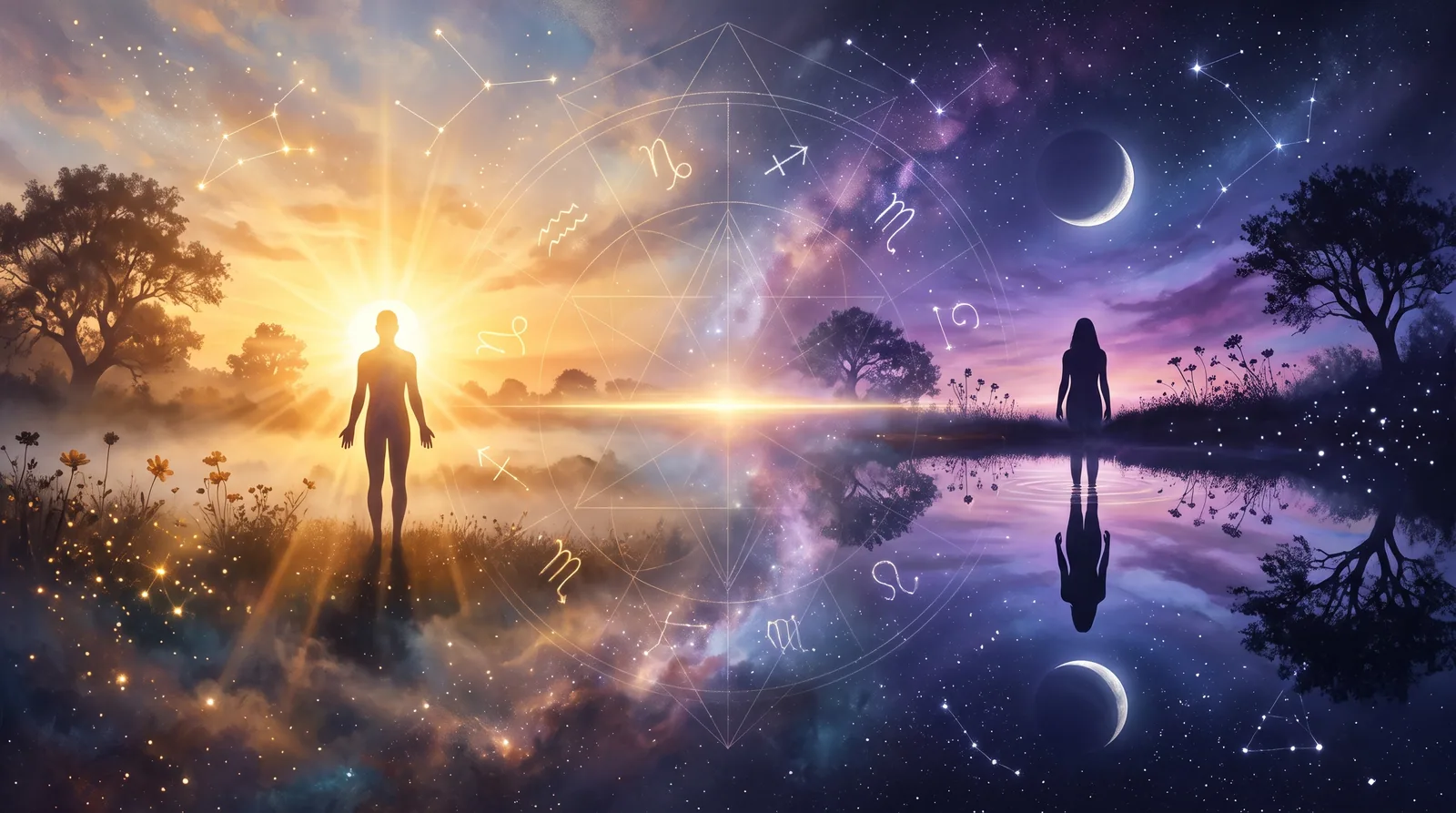
In astrology, the Vertex is a symbolic point in the birth chart associated with meaningful encounters, unexpected turning points, and experiences that seem to arrive from outside our plans. Often called the point of fated encounters, it is explored by astrologers who want to understand why certain people and experiences leave such a lasting impression.
The Vertex doesn't promise that every intense connection is a soulmate relationship, nor does it mean your future has already been decided. Instead, it offers a spiritual lens through which to explore the people who awaken something within you, the circumstances that redirect your path, and the moments that invite you to grow.
Sometimes, the most important encounter isn't the one that gives you what you expected. It's the one that helps you discover what your soul has been asking for all along.
What Is the Vertex in Astrology?
The Vertex in astrology is a calculated point in your natal birth chart. It isn't a planet, asteroid, or physical celestial body. It is an intersection of astronomical reference points that astrologers interpret symbolically.
While your Sun sign describes an important part of your identity, your Moon sign speaks to your emotional world, and your Ascendant describes how you approach life, the Vertex is often explored through the lens of encounters that feel significant or unexpectedly transformative.
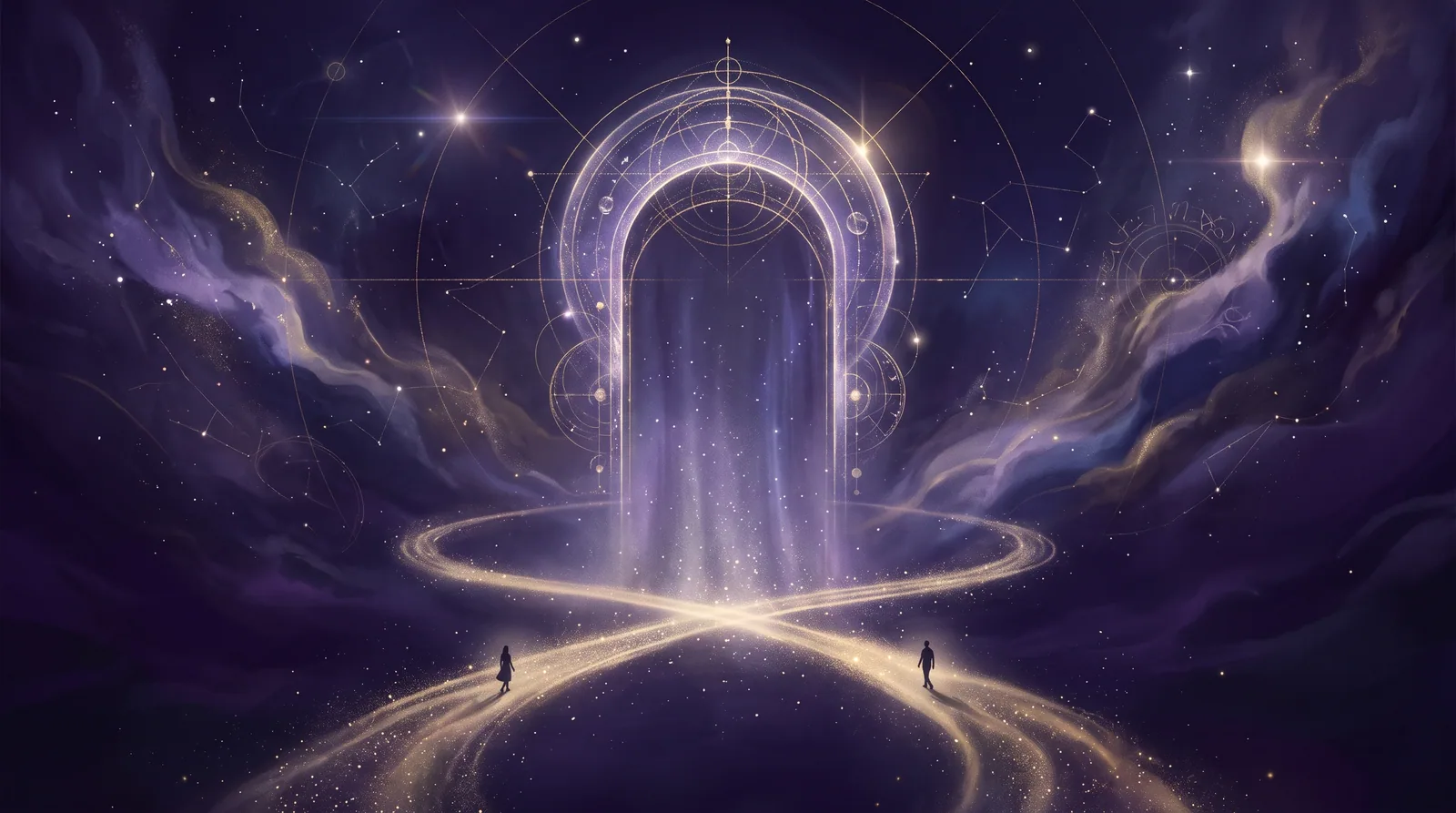
In spiritual astrology, the Vertex is sometimes called the Gate of Destiny. This name reflects its association with experiences that seem to arrive through circumstance rather than deliberate planning.
You might encounter its symbolism through:
- Meeting someone who changes how you understand love.
- Finding a mentor who helps you recognize a calling you had overlooked.
- Experiencing a chance encounter that opens a new professional or creative direction.
- Entering a relationship that brings an old emotional pattern into the light.
- Reaching a crossroads that encourages you to release an outdated version of yourself.
The common thread isn't necessarily romance or dramatic change. It is the feeling that an encounter carries meaning beyond its immediate circumstances.
The Vertex invites you to pay attention to what an experience awakens in you, rather than assuming that its significance is proof of a predetermined future.
The Spiritual Meaning of the Vertex: When Life Opens an Unexpected Door
We often imagine that transformation begins with a conscious decision. We decide to change careers, end a relationship, move somewhere new, or finally pursue a dream.
But sometimes, change begins before we have made a plan.
A stranger asks a question that stays with us for years. A friendship challenges a belief we have held since childhood. A relationship reveals a part of ourselves we had carefully avoided. A seemingly ordinary opportunity leads us toward a life we could not previously imagine.
The spiritual symbolism of the Vertex lives in these moments.
It represents the possibility that growth sometimes comes through encounters we could never have organized ourselves. We cannot control every person we meet or predict every circumstance that will shape us. We can, however, become more aware of what these experiences teach us.
A meaningful encounter may show you where you have become too comfortable, where your heart is ready to open, or where an old fear is preventing you from moving forward.
That doesn't mean every difficult experience was meant to happen or that suffering should be interpreted as a spiritual assignment. It means you can search for understanding without surrendering your judgment.
The deeper invitation of the Vertex is to remain open to life's unexpected doors while choosing consciously which ones you walk through.
The Vertex and the Anti-Vertex: Understanding the Two Sides of the Story
The Vertex has an opposite point in the birth chart known as the Anti-Vertex. Together, these points form an axis that some astrologers interpret as a relationship between external encounters and personal responses.
The Vertex is associated with experiences and people who seem to arrive unexpectedly. The Anti-Vertex can be interpreted as the more familiar or self-directed side of the same story: your habits, preferences, and established ways of navigating life.
Think of a person who has always chosen relationships that feel safe and predictable. Then they meet someone who gently challenges their assumptions about intimacy. The encounter may bring something unfamiliar into their world, but the way they respond depends on their own values, boundaries, and emotional readiness.
In this symbolic reading, the Vertex represents the unexpected meeting, while the Anti-Vertex offers a way to reflect on the familiar patterns you bring to it.
Neither point should be treated as a command from the universe. Their value lies in helping you explore the relationship between what life presents and what you choose to do with it.
The Vertex and the Lunar Nodes: Two Different Spiritual Themes
The Vertex and the Lunar Nodes are sometimes discussed together in evolutionary astrology, but they represent different symbolic themes.
The North and South Nodes are associated with the broader journey of growth: familiar patterns you may be learning to move beyond and qualities you are learning to develop.
The Vertex, by contrast, is often associated with particular encounters or turning points that bring those themes into focus.
Imagine that you are learning to trust yourself rather than constantly seeking approval. Your Lunar Nodes may provide a symbolic framework for exploring that lifelong lesson. Then you meet someone whose presence challenges your need to be liked by everyone.
That person doesn't automatically determine your destiny. But the encounter may reveal how much progress you have made, what still feels uncomfortable, and where your next step lies.
The Nodes describe a broader spiritual narrative; the Vertex offers another way to reflect on the moments and relationships that bring that narrative to life.
Vertex Synastry: Why Some Relationships Feel Fated
One of the most popular uses of the Vertex is in relationship astrology, particularly synastry.
Synastry compares two birth charts to explore the symbolic dynamics between people. When one person's planets closely align with another person's Vertex, astrologers may interpret the connection as especially memorable, catalytic, or significant.
This is sometimes described as a soulmate indicator. But the more nuanced interpretation is that the relationship may become a meaningful chapter in both people's lives.
When someone's Sun touches your Vertex
The Sun symbolizes identity, vitality, and self-expression.
When another person's Sun forms a close conjunction with your Vertex, an astrologer might interpret the connection as one that brings your sense of self into focus. This person may encourage you to recognize your strengths, question an outdated identity, or become more comfortable expressing who you really are.
Their influence might feel inspiring, challenging, or both.
When someone's Moon touches your Vertex
The Moon represents emotional needs, instinctive responses, and the feeling of belonging.
A close Moon–Vertex conjunction may be interpreted as an emotionally resonant connection. You might feel unusually understood by the other person, or the relationship may bring feelings to the surface that you hadn't fully acknowledged.
Emotional familiarity can be powerful, but it is still worth distinguishing a genuine sense of safety from the intensity of a new attachment.
When someone's Venus touches your Vertex
Venus is associated with love, attraction, beauty, pleasure, and personal values.
A Venus–Vertex conjunction is often explored in romantic synastry because it can symbolize an encounter that awakens your capacity for affection, connection, or self-worth.
The relationship may inspire you to reconsider what you want from love. Sometimes the most valuable lesson is not about finding a partner but about learning how to receive love without abandoning yourself.
When someone's Mars touches your Vertex
Mars symbolizes desire, initiative, courage, and action.
A Mars–Vertex conjunction may describe a connection that brings movement into your life. The person might encourage you to take a risk, stand up for yourself, pursue an ambition, or confront something you have been avoiding.
This energy can feel exciting, but it can also be challenging. Passion and friction are not, by themselves, evidence of compatibility.
Does a Vertex connection mean someone is your soulmate?
Not necessarily.
A close Vertex contact can be a meaningful symbol within an astrological reading, but it cannot establish whether a relationship is destined, healthy, permanent, or mutually fulfilling.
Some relationships transform us because they help us understand what love can be. Others transform us because they reveal what we are no longer willing to accept.
A connection can be significant without lasting forever. A relationship can feel spiritually profound and still require difficult decisions. And a lasting partnership is built not only on chemistry or symbolism but also on trust, communication, respect, and shared effort.
If someone activates your Vertex, consider asking a more useful question than whether they are your destined person:
Who am I becoming through this connection, and is that growth helping me live more honestly?
How Transits to the Vertex Can Reflect Turning Points
In astrology, a transit occurs when a planet's current position forms an aspect to a point in your birth chart. Astrologers sometimes pay special attention to transits involving the Vertex when exploring periods of meaningful change.
A transit does not guarantee that a particular event will happen. Instead, it can provide a symbolic framework for reflecting on the themes that may be coming into focus.
Uranus transits: Making room for the unexpected
Uranus is associated with freedom, awakening, and breaking away from established patterns.
A Uranus–Vertex contact may be interpreted as a period when unexpected encounters or changing circumstances encourage you to question your usual approach to life.
You may find yourself drawn toward a new community, a different way of working, or a relationship that challenges your assumptions.
The spiritual invitation is to stay curious without confusing unpredictability with purpose. Not every disruption is a sign to abandon what you have built.
Neptune transits: Intuition, longing, and spiritual clarity
Neptune is associated with dreams, imagination, compassion, and the search for something greater than the everyday self.
A Neptune–Vertex contact may invite reflection on idealization, spiritual longing, and the difference between intuition and wishful thinking.
You might feel deeply inspired by someone or sense that an experience carries unusual meaning. Give yourself space to explore that feeling while allowing time and reality to reveal what the connection truly offers.
Spiritual openness and clear boundaries can exist together.
Pluto transits: Deep transformation and the release of old patterns
Pluto is associated with power, endings, renewal, and psychological transformation.
A Pluto–Vertex contact may symbolize a period of profound inner change, particularly when an encounter brings hidden fears, attachment patterns, or questions of control into awareness.
The experience may encourage you to recognize where you have outgrown an old identity.
Transformation does not need to be dramatic to be real. Sometimes it begins with the quiet decision to stop repeating a pattern that no longer reflects who you want to become.
Eclipses and the Vertex
Eclipses are often interpreted in astrology as symbols of transition, revelation, and changing priorities. Some astrologers pay special attention when an eclipse closely aspects the Vertex.
Such periods can be used for reflection on relationships, decisions, and emerging possibilities. However, an eclipse does not guarantee a fated meeting, sudden breakup, or irreversible life event.
Rather than waiting anxiously for destiny to intervene, consider what is already changing in your life and which choices deserve your attention.
The Vertex Through the Houses: Where Meaningful Encounters May Unfold
The house containing your Vertex offers an additional layer of interpretation. In many house systems, the Vertex is found in the western half of the birth chart, frequently in the fifth through eighth houses, although its exact placement depends on the chart and house system used.
The house describes the area of life in which astrologers might look for themes of unexpected encounters, significant relationships, and personal turning points.
Vertex in the 5th House: Love, Creativity, and the Return of Joy
The fifth house is associated with romance, creativity, pleasure, playfulness, and self-expression.
With the Vertex in the fifth house, meaningful encounters may be interpreted through experiences that awaken your heart or reconnect you with a part of yourself you have neglected.
You might meet someone who inspires you to create again, encourages you to take your artistic gifts seriously, or reminds you that love does not have to be approached as a problem to solve.
Romantic connections may feel especially memorable, but this placement is not limited to love affairs. A creative collaboration, an artistic mentor, or a new passion can be equally transformative.
The deeper lesson is to make room for joy without needing to justify every moment of happiness.
Spiritual reflection: Where have you stopped allowing yourself to play, create, or love freely?
Vertex in the 6th House: Daily Life, Service, and Meaningful Work
The sixth house is associated with daily routines, work, service, habits, and the practices that sustain your well-being.
A sixth-house Vertex may symbolize important encounters that emerge through ordinary life. A colleague might become an unexpected mentor. A new responsibility may reveal a calling. A change in routine may help you recognize what you need to feel more balanced.
These experiences remind us that spiritual growth does not happen only during dramatic breakthroughs. It can emerge through small acts of care, the work we choose to do, and the habits we practice when nobody is watching.
This placement should not be read as a prediction of illness or a sign that you must sacrifice yourself to serve others. Meaningful work and genuine care include caring for your own needs.
Spiritual reflection: Which everyday practices bring you closer to the person you want to become?
Vertex in the 7th House: Partnership, Reflection, and Soul-Level Lessons
The seventh house is traditionally associated with committed partnerships, marriage, collaboration, and the ways we encounter ourselves through other people.
A seventh-house Vertex is often connected with the theme of fated relationships because the house emphasizes one-to-one bonds.
You may interpret important relationships through the lessons they bring about trust, reciprocity, vulnerability, and boundaries. A partner might show you a quality you have struggled to claim in yourself, or a significant collaboration may teach you how to share responsibility without losing your independence.
The spiritual work of partnership is not simply to find someone who feels familiar. It is to learn how to remain fully yourself while allowing another person to be fully themselves, too.
A powerful connection is not automatically a healthy one. Mutual respect and consistent care matter more than a feeling of inevitability.
Spiritual reflection: What is love teaching you about the balance between closeness and self-respect?
Vertex in the 8th House: Intimacy, Release, and Inner Renewal
The eighth house is associated with intimacy, shared resources, vulnerability, psychological depth, and the process of transformation.
With the Vertex in the eighth house, astrologers may explore encounters that invite you to look beneath the surface. A relationship might reveal an old fear around trust. A difficult conversation could open the way to greater honesty. An experience of emotional closeness may help you understand where you have been protecting yourself.
This placement can symbolize profound inner work, but it does not mean that pain, obsession, or emotional turmoil is necessary for spiritual growth.
True transformation can involve learning to receive support, sharing your feelings safely, setting boundaries, or releasing the belief that love must be earned through suffering.
Spiritual reflection: What are you ready to release so that deeper trust can begin?
How to Find the Vertex in Your Birth Chart
If you want to explore your Vertex, you will need your birth date, birth time, and birthplace.
The birth time is particularly important because the Vertex depends on the chart's astronomical orientation. An inaccurate birth time can change the calculated position and may affect the house placement.
To find it:
- Open a natal birth chart calculator that includes the Vertex.
- Enter your birth date, birth time, and birthplace as accurately as possible.
- Look for the symbol marked Vx or the word Vertex.
- Note the zodiac sign and house in which it appears.
- If you are exploring relationship astrology, compare your Vertex with the other person's planetary placements using a synastry chart.
If the Vertex is missing, check whether your chart calculator offers additional points or advanced chart settings.
Remember that astrology software can calculate a position, but interpretation remains symbolic. A single placement should not be used to define your entire personality, predict a specific event, or determine the future of a relationship.
What to Ask When a Meaningful Encounter Changes Your Life
When someone enters your life and leaves a lasting impression, it is natural to wonder why.
The Vertex offers one way to explore that question, but you do not need an astrological explanation to take an experience seriously.
You can begin by asking yourself:
- What did this person help me see that I had not noticed before?
- Did the connection encourage me to become more honest with myself?
- Am I responding to genuine compatibility, or to the intensity of uncertainty?
- Which parts of my life are asking for change, regardless of what happens with this person?
- What can I learn from this encounter without needing to know how the story ends?
These questions allow you to honor the spiritual meaning of an experience while remaining grounded in your own judgment.
You do not have to label someone your soulmate to acknowledge that they mattered. You do not have to believe an encounter was predetermined to recognize that it changed you.
Sometimes, meaning becomes clearer only after we have lived through the experience.
The Vertex and the Mystery of Divine Timing
There is something deeply human about looking back at our lives and noticing how one encounter led to another.
A conversation introduced us to a friend. A friendship opened the door to a new opportunity. A relationship taught us what we needed to heal. A moment of uncertainty eventually became the beginning of a different path.
When we look back, these events can seem beautifully connected, even if we could never have predicted them at the time.
The Vertex gives astrologers a symbolic language for exploring this mystery. It invites us to consider the possibility that some encounters become turning points because they meet us at moments when we are ready to change.
But meaningful timing does not take away our freedom. You can welcome an unexpected connection without rushing into it. You can learn from a relationship without remaining in it. You can recognize a new possibility and still take the time you need to decide.
Perhaps the most spiritual way to understand the Vertex is not as a promise that the universe has already written your story, but as a reminder that life can surprise you in ways you cannot yet imagine.
Some people arrive to walk beside you. Others arrive to help you see a new path. And some encounters reveal something you needed to discover within yourself all along.
You may not always know why a particular meeting happened.
You can still choose what it means to you.
If you feel ready to explore the deeper patterns behind your relationships, your birth chart can offer a thoughtful starting point. Explore your personal astrological insights with AstroGPT and reflect on the connections, questions, and possibilities unfolding in your life.
Final Thoughts: Every Encounter Has Something to Teach You
The Vertex reminds us to stay curious about the moments that change our perspective and the people who awaken something unexpected within us.
You cannot always know whether a meeting will become a lifelong relationship, a brief but important chapter, or a lesson you only understand years later.
What you can do is meet life with an open heart, remain honest about what a connection brings into your world, and remember that meaningful relationships should leave room for your freedom, dignity, and growth.
You do not need to surrender your choices to destiny.
Sometimes, the real gift of a fated-feeling encounter is discovering that you have more choices than you once believed.
Frequently asked questions
What does the Vertex mean in astrology?
What does the Vertex mean in a birth chart?
Is the Vertex a soulmate indicator?
What is Vertex synastry?
What happens when someone's planet conjuncts your Vertex?
Can the Vertex predict when I will meet my soulmate?
What does the Vertex in the 7th house mean?
What does the Vertex in the 8th house mean?
What is the difference between the Vertex and the Anti-Vertex?
Is the Vertex the same as the North Node?
Does everyone have a Vertex in their birth chart?
Keep reading

Across Psychic Pulse
The same themes, seen through another practice.