Dreaming of Your Own Death: The Spiritual Meaning of Transformation and Rebirth
Dreaming of your own death can be frightening, but it doesn't have to be a symbol of doom. Explore how death dreams may reflect inner transformation, the release of an old identity, and the quiet invitation to begin again.

In this article (9)
Sometimes the end we witness in a dream is not the end of our life, but the beginning of a different relationship with ourselves.
Waking up after dreaming of your own death can leave you shaken. Perhaps you remember the moment everything went dark. Maybe you watched yourself disappear, felt yourself leaving your body, or experienced a strange peace as your dream came to an end.
Even after you open your eyes, the feeling can remain.
You may find yourself wondering: Does dreaming of my own death mean something terrible is going to happen? Is it a warning? Or is there a deeper spiritual meaning behind what I experienced?
First, take a breath.
Dreaming of your own death does not mean you are going to die. Dreams are not reliable predictions of the future, and a frightening dream is not proof that danger is approaching.
Across spiritual traditions, mythology, and Jungian dream interpretation, death is also understood as a symbol of transformation. It can represent the closing of a chapter, the release of an old identity, or the moment when something inside you is ready to change.
Sometimes, the life you have been living no longer fits the person you are becoming.
Your dreams may give that feeling an unforgettable image.
Rather than treating a death dream as a prophecy, you can approach it as an invitation to listen more closely to your inner world. What are you holding on to? What are you grieving? And what part of your life might be asking for a new beginning?
What Does Dreaming of Your Own Death Mean Spiritually?
The spiritual meaning of dreaming of your own death often centers on transformation, surrender, and renewal.
In symbolic dream interpretation, death may represent the ending of an emotional chapter rather than the ending of physical life. It can reflect a changing sense of identity, the release of familiar habits, or a growing awareness that you cannot return to the person you once were.
You may be experiencing this kind of inner transition when:
- You are leaving behind a relationship, role, or way of living that no longer feels right.
- You are beginning to question beliefs you have carried for years.
- You are learning to stop pleasing everyone at the expense of your own needs.
- You are grieving a past version of yourself.
- You feel drawn toward a more honest, meaningful, or spiritually connected life.
- You are standing at a crossroads without knowing exactly what comes next.
Not every death dream has a profound spiritual message. Sometimes dreams reflect everyday stress, memories, fears, or emotions that have not fully settled.
But if the dream stays with you, it may be worth exploring what made it so powerful.
The most useful question is not whether the dream predicts an ending, but whether it reflects an ending you are already experiencing within yourself.
Death in Dreams: A Symbol of Letting Go
There is a reason the image of death can feel so emotionally charged.
We are attached to what we know. Even when a familiar situation no longer brings happiness, it can offer a sense of safety. We know who we are within it, what is expected of us, and how to move through each day.
Change takes away that certainty.
In this sense, dreaming of your own death may mirror the emotional experience of releasing something that once defined you.
Perhaps you have always been the dependable one, the person who never says no. Perhaps you built your identity around achievement, approval, or the belief that you must remain strong for everyone else.
What happens when that identity begins to loosen?
You may feel exposed, uncertain, or even frightened. It can seem as though you are losing yourself.
Yet sometimes you are not losing yourself. You are discovering that you are more than the role you learned to play.
Spiritual growth often involves this quiet kind of letting go. It asks you to recognize what has served its purpose, honor what it taught you, and make room for a different way of being.
You do not have to reject your past to grow beyond it.
You can thank the person you once were for helping you survive, love, achieve, or endure — and still allow yourself to change.
The Jungian Meaning of Dreaming of Your Own Death
The Swiss psychiatrist Carl Gustav Jung explored dreams as meaningful expressions of the unconscious mind. His work emphasized that our inner lives contain more than the parts of ourselves we consciously recognize.
We have familiar identities, public roles, hidden fears, unacknowledged desires, and qualities we may have learned to suppress. Jung's idea of individuation describes the lifelong process of becoming more whole by recognizing and integrating these different parts of ourselves.
Through this lens, dreaming of your own death can be explored as a symbol of psychological transformation.
The Death of an Old Identity
In Jungian thought, the ego is our conscious sense of who we are. It helps us navigate the world, but it does not represent the whole of our inner life.
When we become too attached to one identity, we may struggle to acknowledge anything that challenges it.
A person who has always considered themselves independent may find it difficult to ask for help. Someone who prides themselves on being agreeable may struggle to express anger or set boundaries. A person who has always pursued success may feel lost when achievement no longer brings fulfillment.
A dream of death may offer a dramatic image of this inner conflict.
The identity you have relied upon may be changing, even if your conscious mind has not yet found the words for it.
This is one possible interpretation, not a universal rule. The meaning depends on your circumstances, emotions, and personal associations.
Meeting the Shadow
Jung used the term shadow to describe aspects of ourselves that we struggle to recognize or accept.
The shadow is not necessarily something dark or dangerous. It may contain anger you were taught to hide, creativity you never pursued, vulnerability you considered weakness, or desires that did not fit the image you wanted others to see.
Sometimes, transformation begins when these hidden parts ask to be acknowledged.
If you dream of dying during a period of intense self-reflection, consider whether you are outgrowing an old belief about who you are allowed to be.
Perhaps the person who always stays quiet is learning to speak. Perhaps the person who controls everything is learning to trust. Perhaps the person who has spent years seeking approval is beginning to choose their own direction.
You do not need to destroy any part of yourself to grow. You can begin by listening to what you have been afraid to acknowledge.
The Movement Toward Wholeness
Jung's concept of the Self refers to a broader sense of psychological wholeness that extends beyond the conscious ego.
In spiritual language, some people might describe a similar experience as becoming more aligned with their deeper nature.
The two ideas are not identical, but both can offer a useful lens for reflection.
Dreaming of your own death may invite you to question whether the life you present to the world reflects what you truly feel within.
Are you living according to your values, or according to expectations you inherited?
Are you making choices from love and conviction, or from fear of disappointing others?
There may be no immediate answer. Sometimes the first step toward a more authentic life is simply recognizing the distance between who you appear to be and who you feel yourself becoming.
What Different Death Dreams May Symbolize
The details of a dream can offer clues, but no single scenario has one fixed meaning. Your feelings during the dream, the people involved, and what is happening in your waking life all matter.
Dreaming That You Die Peacefully
If you die peacefully in a dream, you may wake with an unexpected sense of calm.
Rather than terror, you might remember acceptance, stillness, or a feeling that something had reached its natural conclusion.
One possible interpretation is that you are becoming more comfortable with change. You may be ready to release an old expectation, forgive yourself for the past, or accept that a particular chapter cannot continue in the same way.
The dream may also reflect a longing for rest if you have been carrying too much for too long.
Ask yourself: What would it feel like to stop fighting a change that I already know is happening?
Peaceful death in a dream does not prove that you have completed an inner transformation. But the feeling of peace may be worth exploring.
Dreaming of a Violent or Sudden Death
A sudden, frightening, or violent death dream can be especially unsettling.
You may feel pursued, trapped, attacked, or powerless to prevent what happens.
Such dreams can sometimes reflect stress, uncertainty, conflict, or a fear of losing control. They may arise during periods when life feels unpredictable or when you are resisting a change you did not choose.
If this interpretation resonates, consider where you feel under pressure.
Is there a situation in which you feel that your voice is not being heard? Are you afraid of losing something important? Are you trying to hold together a part of your life that feels increasingly difficult to sustain?
The dream does not mean that violence or disaster is coming. It may simply reflect how intense your emotions have become.
If the dream is recurring or connected to a distressing experience, it may also help to speak with a qualified mental health professional.
Dreaming of Watching Yourself Die
Watching yourself die from outside your body can create a particularly strange experience. You may see yourself as though you were another person, or feel as if you are observing the dream from a distance.
Symbolically, this perspective may invite reflection on your relationship with your identity.
Can you observe your thoughts without believing every one of them? Can you recognize a familiar emotional pattern without automatically acting on it? Can you acknowledge a painful experience without allowing it to define your entire life?
In spiritual practice, this kind of reflection is sometimes associated with the witnessing self — the capacity to notice thoughts and emotions without becoming completely identified with them.
However, watching yourself die in a dream does not automatically indicate spiritual awakening or a particular level of consciousness. Dreams are personal, and their meanings cannot be determined from one detail alone.
The most useful question may be: What did I notice about myself when I became the observer?
Dreaming That You Die and Come Back to Life
Few dream images express renewal as clearly as dying and returning to life.
If you dream that you die and then awaken, rise, or begin living again, the experience may symbolize hope, resilience, or the possibility of seeing your circumstances differently.
Perhaps a former version of your life is ending, but you have not yet discovered what will replace it. Perhaps you are recovering from disappointment or beginning to imagine a future you once thought impossible.
The dream may offer a symbolic reminder that an ending does not erase everything that came before it.
You carry your experiences, lessons, relationships, and memories with you. Renewal does not require you to become a completely different person. Sometimes it means living with greater honesty, compassion, and freedom.
Dreaming That You Are Saying Goodbye Before You Die
If your dream involves saying goodbye to loved ones, the emotional meaning may center on attachment, separation, or the fear of losing connection.
You might be moving away, changing relationships, becoming more independent, or recognizing that an important season of life is coming to a close.
The dream could also reflect ordinary worries about people you love.
Rather than assuming it predicts a loss, consider what the goodbye felt like. Was it filled with sadness, relief, love, regret, or unfinished words?
Those emotions may reveal something important about your relationships and what you need to express while you are awake.
Is Dreaming of Your Own Death a Sign of Spiritual Awakening?
Some people experience vivid or unusual dreams during periods of spiritual questioning, personal growth, or emotional change.
In spiritual traditions, death and rebirth are recurring symbols of awakening. They represent the release of old attachments, the surrender of false certainty, and the discovery of a deeper relationship with life.
For some people, a dream of death may resonate with that journey.
You may be questioning old beliefs. You may feel less interested in seeking approval. You may be becoming more aware of your emotions, values, and the ways you want to spend your life.
But it is important not to treat a death dream as proof of spiritual awakening. One dream cannot establish that you have reached a particular spiritual state, and there is no single dream pattern that everyone must experience.
Spiritual growth is often much quieter than dramatic dream imagery suggests.
It can look like telling the truth when a lie would be easier. It can mean setting a boundary without feeling the need to justify it. It can mean forgiving yourself, asking for help, or choosing a life that feels more meaningful even when it impresses fewer people.
If your dream has opened a door to reflection, you do not need to force a grand interpretation.
Begin with the changes that are already unfolding in your everyday life.
A Gentle Ritual for Understanding Your Death Dream
You do not need to decode every symbol or discover one perfect explanation for your dream.
Instead, give yourself a few quiet minutes to notice what you remember and how it connects with your present life.
Step 1: Remember the Feeling, Not Just the Story
Before reaching for your phone or rushing into your day, sit quietly and recall the dream.
You might remember fear, grief, relief, confusion, peace, or a mixture of emotions.
Write down whatever stands out without trying to make it meaningful immediately.
Then ask yourself:
- What was the strongest feeling in the dream?
- What moment has stayed with me since waking?
- Did I feel alone, protected, frightened, accepted, or free?
- Does this emotion remind me of anything happening in my life?
You are not searching for a universal dream dictionary answer. You are learning to recognize your own emotional language.
Step 2: Ask What You May Be Ready to Release
Place your feet comfortably on the floor and take a few gentle breaths.
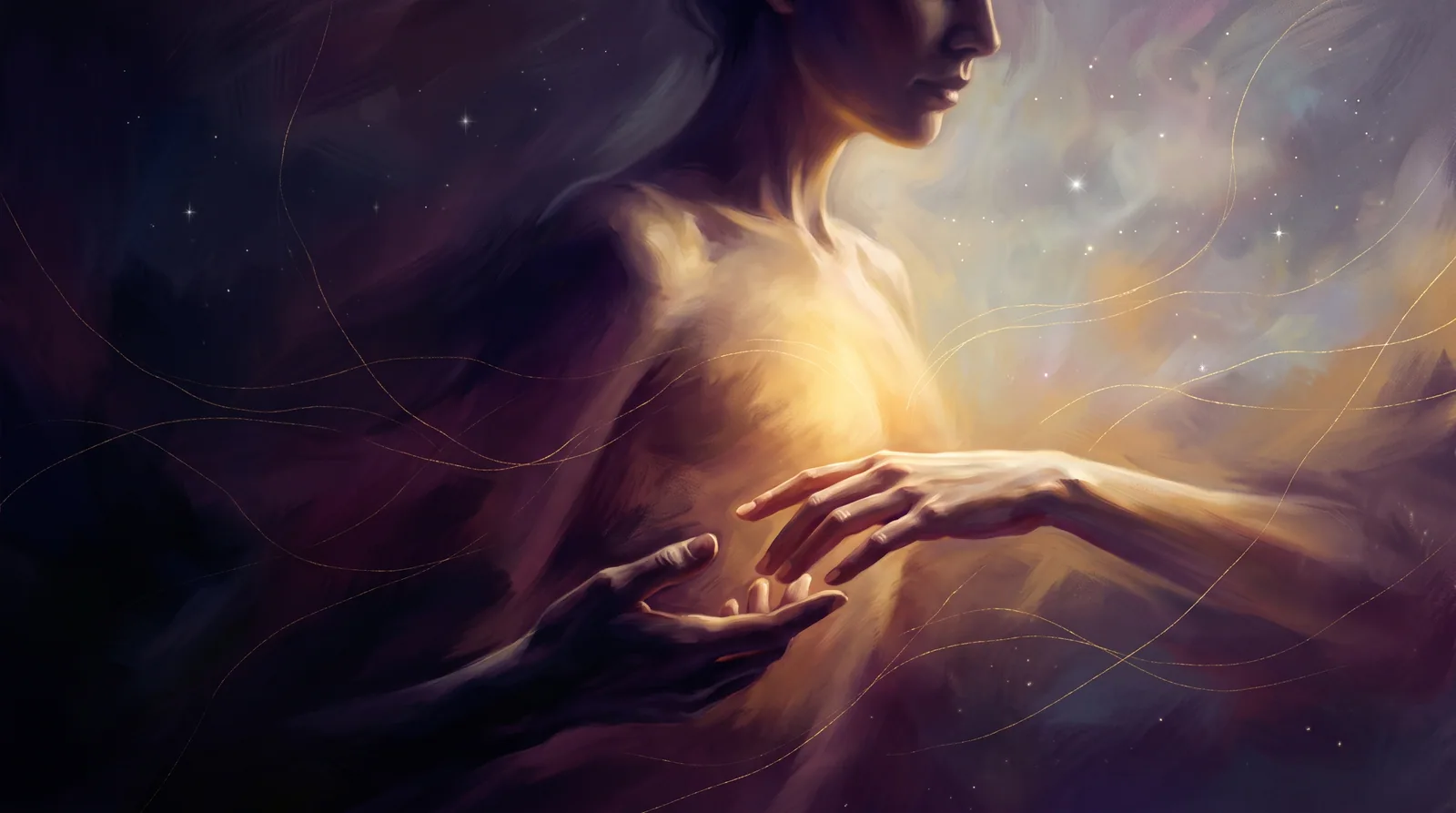
If it feels natural, place one hand over your heart. Allow yourself to acknowledge any emotion that arises without demanding that it disappear.
Then consider these questions:
- What part of my life feels as though it is coming to an end?
- What identity have I outgrown?
- What am I holding on to because it feels familiar?
- What would I choose if I were less afraid of disappointing others?
- Is there something I need to grieve before I can move forward?
You do not have to make a major decision because of a dream. Let your answers emerge slowly, and give yourself permission not to know yet.
Step 3: Welcome the Possibility of Renewal
Complete these sentences in your journal:
I am ready to release…
I want to make more room for…
One small change I can make today is…
Keep your answers honest and practical.
Your renewal might begin with a difficult conversation, a moment of rest, a new boundary, or the decision to stop criticizing yourself for something you cannot change.
If the dream has stirred up difficult emotions, you do not need to turn them into a spiritual lesson immediately. Sometimes the kindest response is simply to rest, seek support, and allow yourself to feel what you feel.
The purpose of this ritual is not to force a transformation. It is to help you listen to yourself with greater patience.
What If the Dream Leaves You Afraid?
Not every dream of death feels peaceful or meaningful. Some leave you frightened long after waking, especially when the images are vivid or the dream repeats.
You do not need to interpret fear as a spiritual warning.
Start by reminding yourself that you are awake and that a dream is not evidence that something bad will happen. Notice your surroundings, feel your feet against the floor, and breathe at a comfortable pace.
If the dream continues to trouble you, consider whether stress, grief, disrupted sleep, or a difficult experience may be contributing to it.
Recurring nightmares can sometimes benefit from professional support, particularly when they interfere with sleep or daily life.
You can explore the symbolic meaning of a dream while also taking your emotional well-being seriously. Spiritual reflection and practical care can exist together.
Above all, you do not have to be afraid of your own inner world. You can approach it gently, one feeling and one question at a time.
The Deeper Invitation: Becoming More Fully Yourself
Perhaps the most meaningful question raised by dreaming of your own death is not what you are losing, but what you are ready to live differently.
There are moments when an old version of ourselves can no longer carry us forward.
The beliefs that once protected us may begin to restrict us. The roles that once gave us purpose may begin to feel too small. The approval we once chased may lose its power to make us feel whole.
These moments can be uncomfortable because we often recognize what is changing before we understand what comes next.
Yet uncertainty is not necessarily a sign that you are lost.
Sometimes it is simply the space between one chapter and another.
If your dream resonates with the idea of transformation, let it encourage curiosity rather than fear. Look at your life with honesty. Notice what brings you closer to yourself and what leaves you feeling disconnected. Give yourself permission to change without treating your past as a mistake.
You are allowed to grow beyond an identity that once served you.
You are allowed to begin again without knowing the entire path.
And you are allowed to discover that becoming more fully yourself is not about destroying who you were. It is about bringing more of yourself into the light.
A Parting Blessing
May you meet the unknown with gentleness rather than fear.
May you honor the person you have been, even as you make room for the person you are becoming.
May the endings in your life be met with wisdom, the difficult transitions with compassion, and the new beginnings with an open heart.
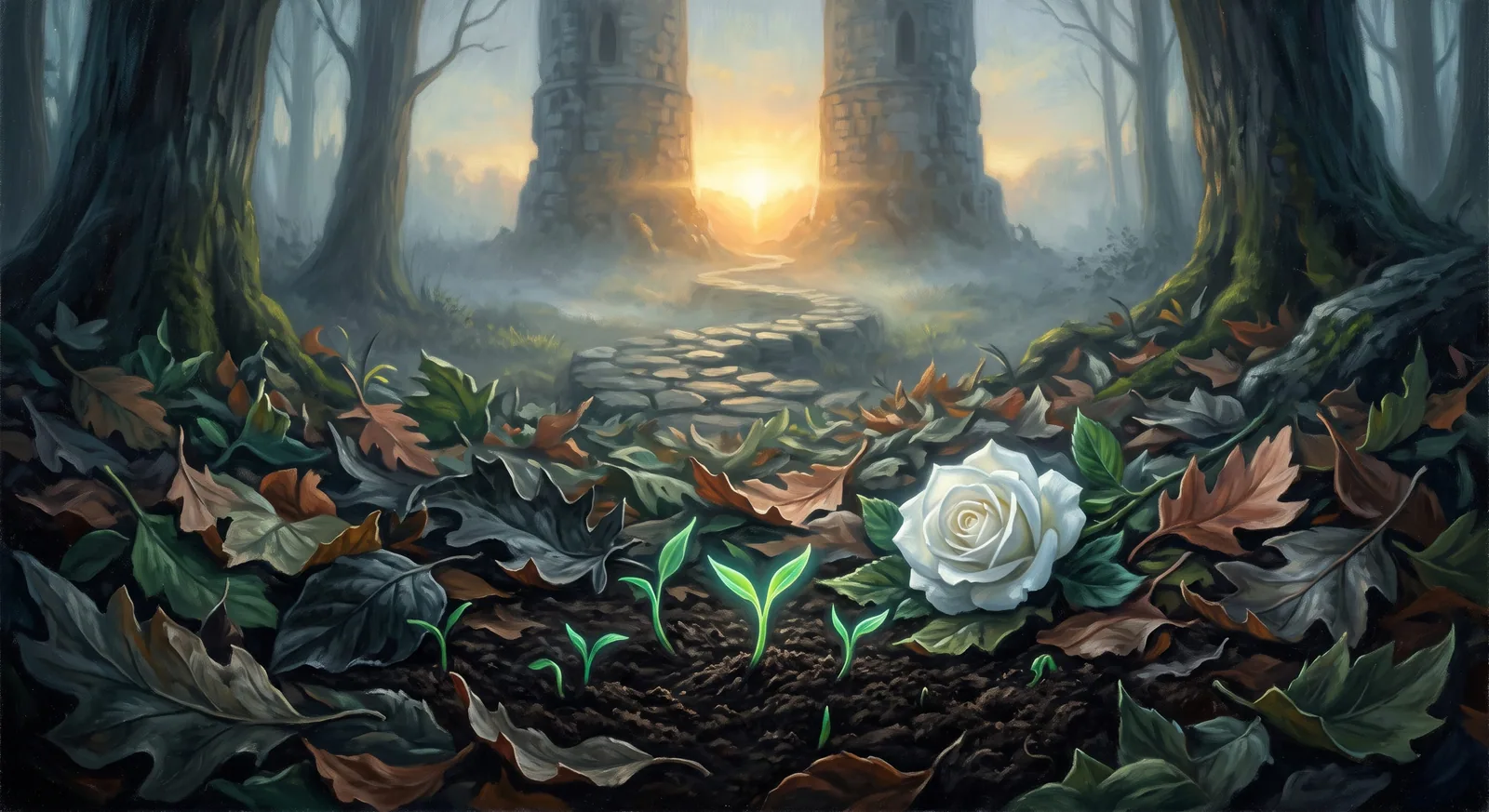
And when a dream leaves you standing at the threshold between darkness and dawn, may you remember that you do not have to understand everything before taking your next step.
Sometimes the first sign of renewal is simply the willingness to listen.
Sometimes the beginning arrives quietly.
And sometimes, what feels like an ending is an invitation to live more truthfully.
Key Takeaways: Dreaming of Your Own Death
- Spiritual meaning: Dreaming of your own death may symbolize transformation, release, or a new chapter rather than literal death.
- Jungian interpretation: Death can be explored as a symbol of changing identity and the journey toward greater psychological wholeness.
- Emotional clues: Peace, fear, grief, and detachment may offer useful clues, but no dream scenario has one universal interpretation.
- Spiritual awakening: A death dream may inspire reflection, but it is not proof of a spiritual awakening or a prediction of the future.
- Practical integration: Journaling, gentle breathing, and reflecting on current life changes can help you process the dream.
- When to seek support: Recurring nightmares that affect sleep or daily life deserve care and may benefit from professional guidance.
The simplest answer: Dreaming of your own death may be an invitation to explore change, fear, identity, and renewal. You do not need to fear the dream or accept one interpretation as the truth. Begin with what you felt, what is happening in your life, and what would help you move forward with greater clarity.
Frequently asked questions
What does dreaming of your own death mean?
Does dreaming about your own death mean you are going to die?
What is the spiritual meaning of death in a dream?
What does Jung say about dreaming of your own death?
What does it mean to dream that you die peacefully?
Why do I dream about dying violently or suddenly?
What does it mean to watch yourself die in a dream?
What does it mean to die and come back to life in a dream?
Can dreaming of your own death be a sign of spiritual awakening?
Why do I keep dreaming about my own death?
Keep reading


Across Psychic Pulse
The same themes, seen through another practice.